Published 25th December 2025

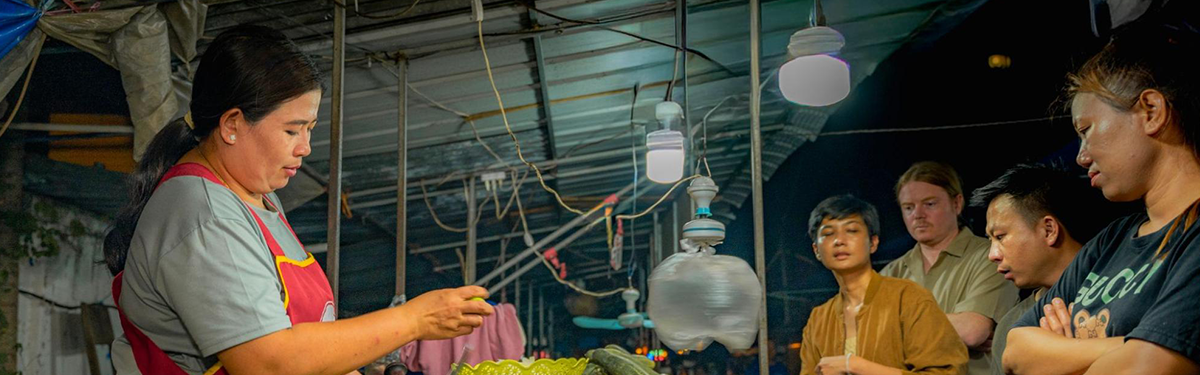
LUANG PRABANG, Laos: Every evening in Luang Prabang, as the golden light fades behind the mountains, the city begins its quiet transformation. Colourful canvas tents spring open along Sisavangvong Road. Fluorescent bulbs hum to life. And under the soft glow, the Luang Prabang Night Market awakens.
To the first-time visitor, the market may appear repetitive, with row after row of identical crafts at similar prices. But look beyond the textiles and trinkets and you will discover something far more valuable: stories of family, sacrifice, and resilience are stitched into every stall.
For many sellers, the night market is a family affair, a side job done out of necessity, but also a quiet act of love.
Painting for a Future: A Librarian by Day, a Mother Always
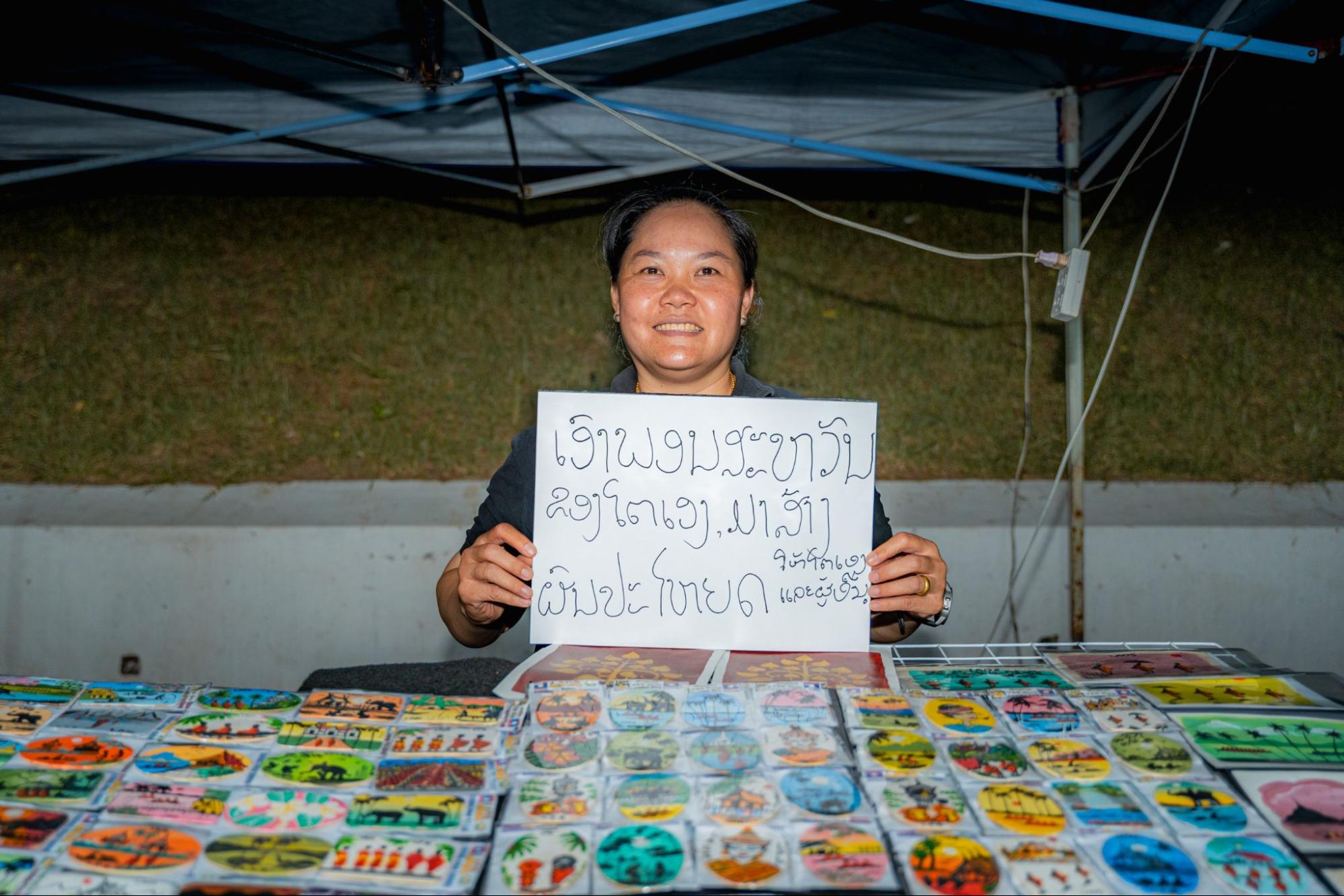
Phonnida Inthichan, 40, has been selling hand-painted magnets at the night market for a decade. By day, she works full-time at the Luang Prabang Library. At night, she paints and mans the stall, sometimes with her younger sister or her two young children.
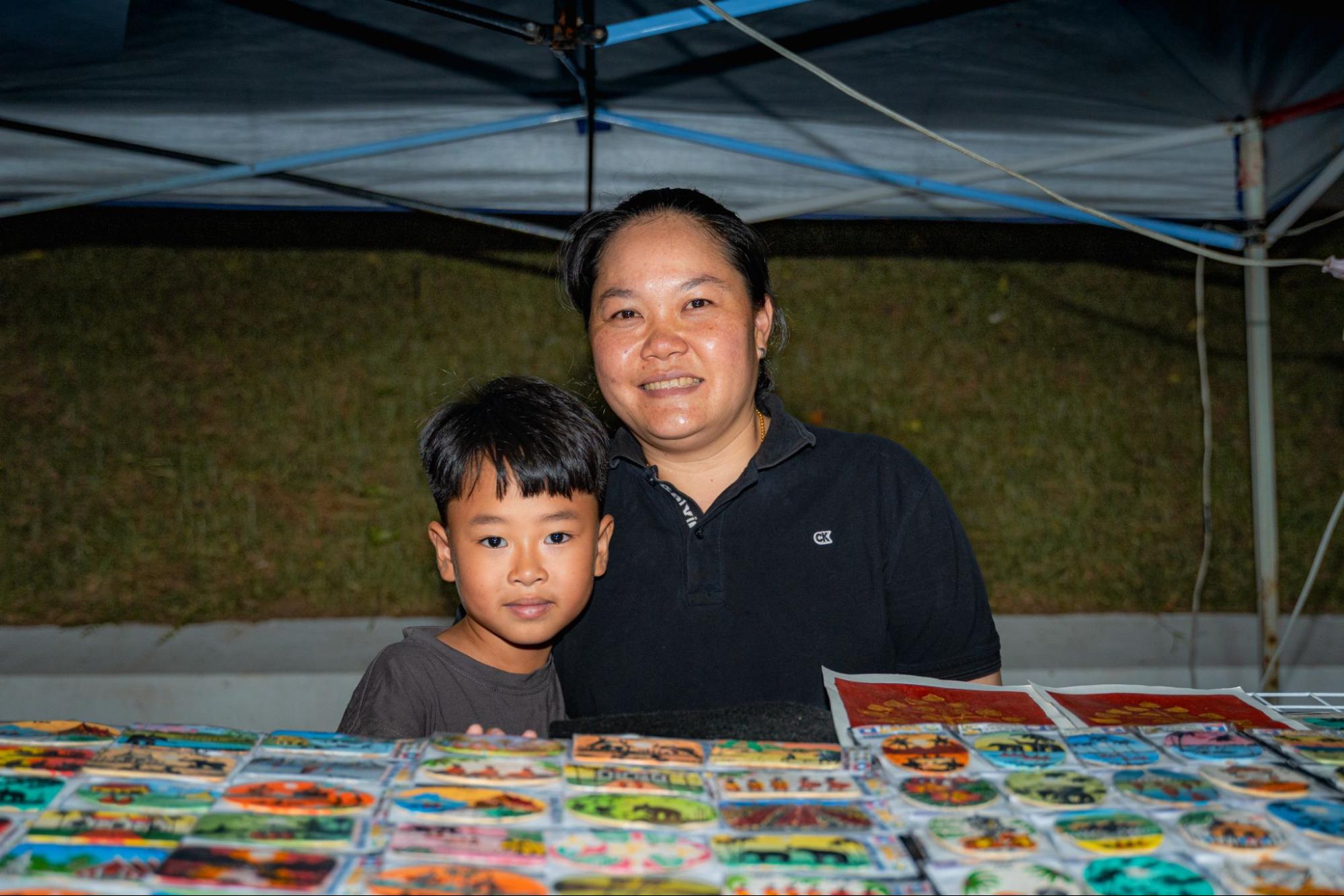
Her eight-year-old son, Toto, fluent in English and full of character, often helps at the stall. When asked if he thinks his mother (Phonnida) is beautiful, he answers immediately, not with a yes or no, but with clarity shaped by the family that raised him.
“That is my father,” he said, pointing at Phonnida. “And that is my mother,” he gestured at his aunt.
A single mother, Phonnida, takes pride in raising her children with the help of her sister. Toto’s quick wit, love for reading, and desire to help are reflections of the care they pour into him.
The bold, simple paintings, which are inspired by others she has seen, are self-taught. And the bomb fragments, a stark reminder of the country’s history, are transformed into delicate works of hope. “My main job does not earn much,” she explained. “This helps us live better.”
Threads That Bind
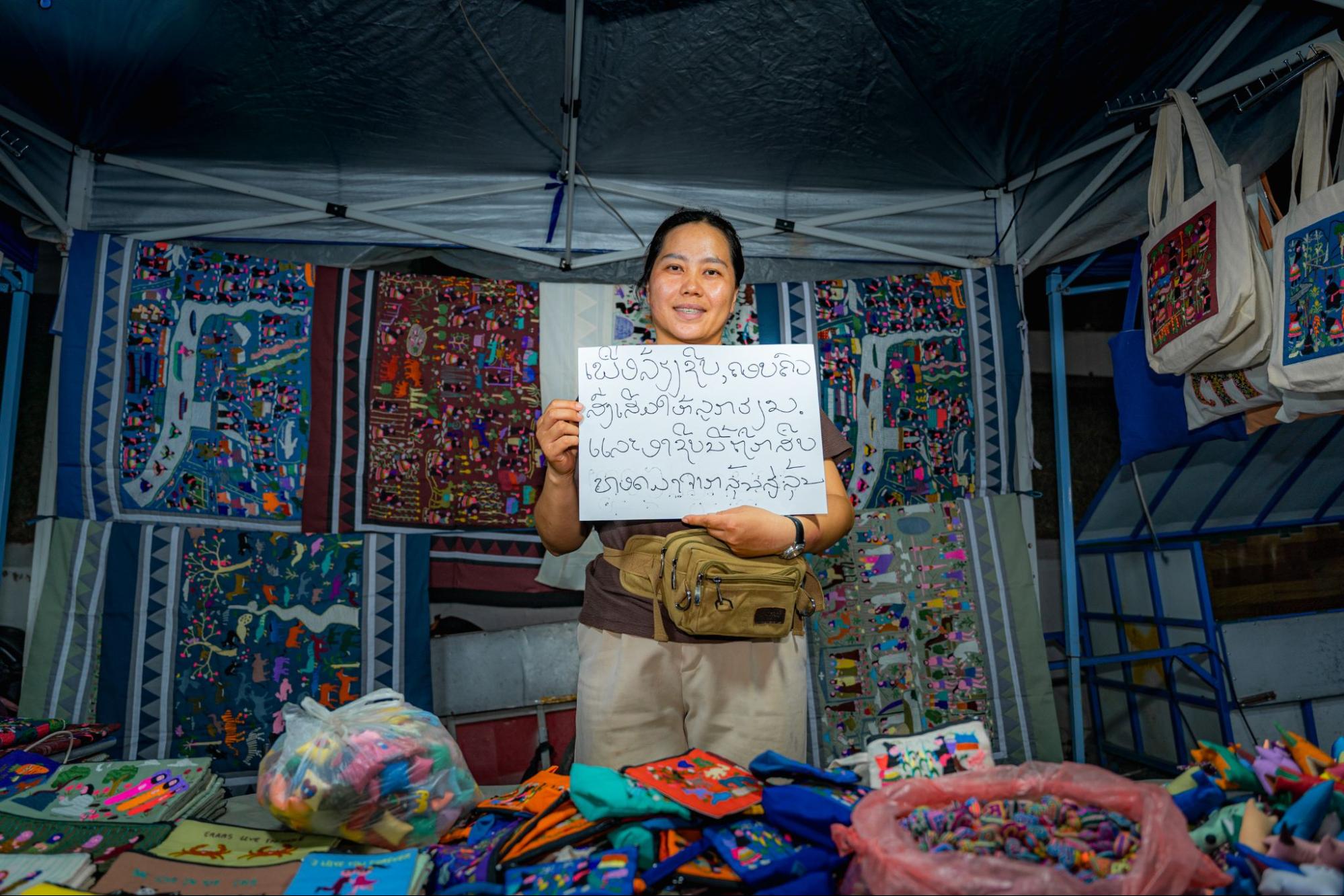
A few stalls down, embroidery flows through generations. Ms Dao Xiong, 36, sits beside her mother, Lee Thor, 60. Together, they have spent over 20 years at the night market, crafting pouches, keychains and embroidered goods rooted in their Hmong heritage.
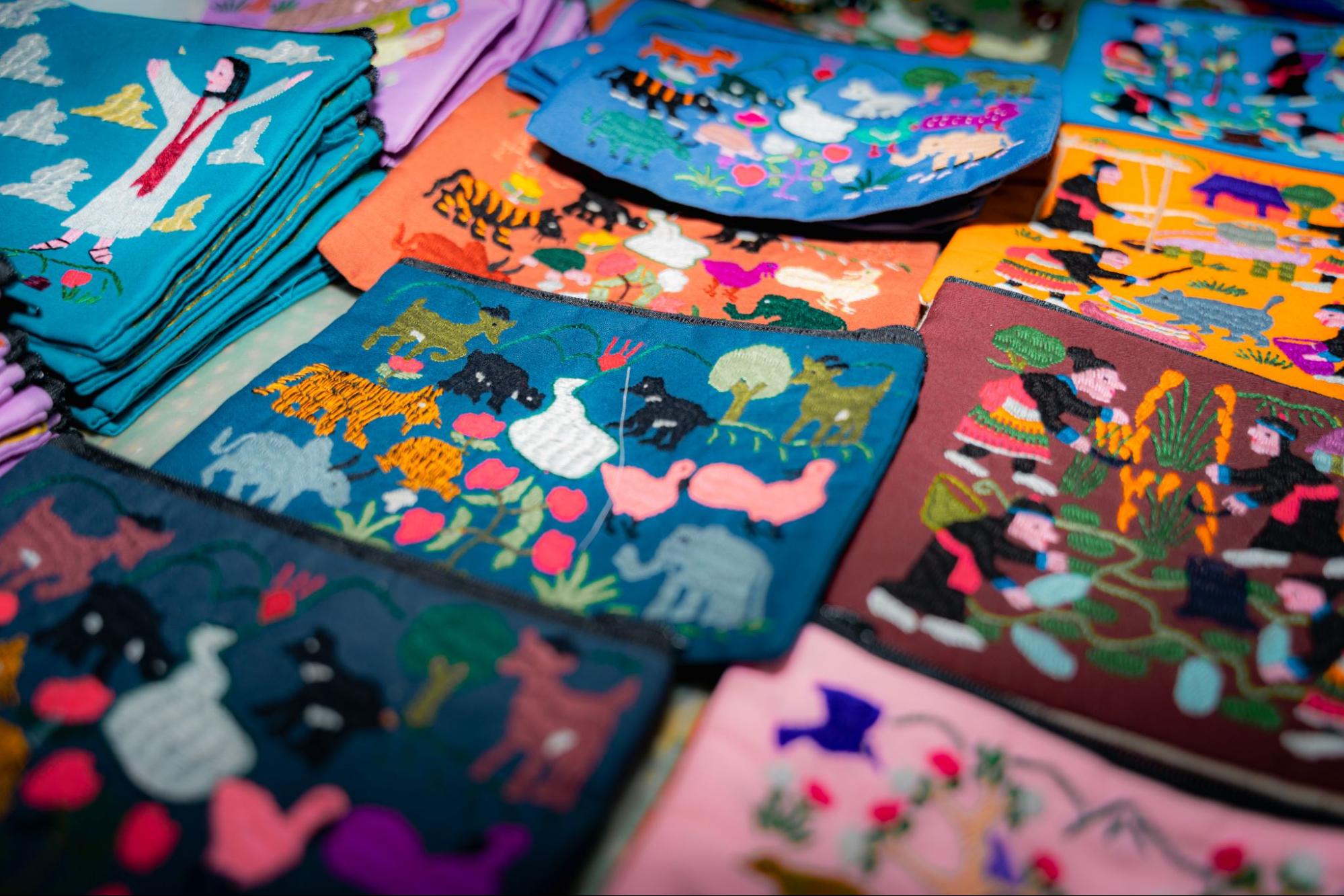
Lee handles the designs. Dao threads and paints. Her husband, a painter and part-time architect, helps too; one drawing, the other stitching. Their four children also take part in this process. The youngest, just nine, began helping with small keychains at the age of six.
Their crafts are not just for sale; they are a continuation of a livelihood passed down from Dao’s parents, who once sold candles to make ends meet. Now, Dao carries that spirit forward, blending tradition with the quiet teamwork of a family.
A Son’s Pride, A Father’s Patience
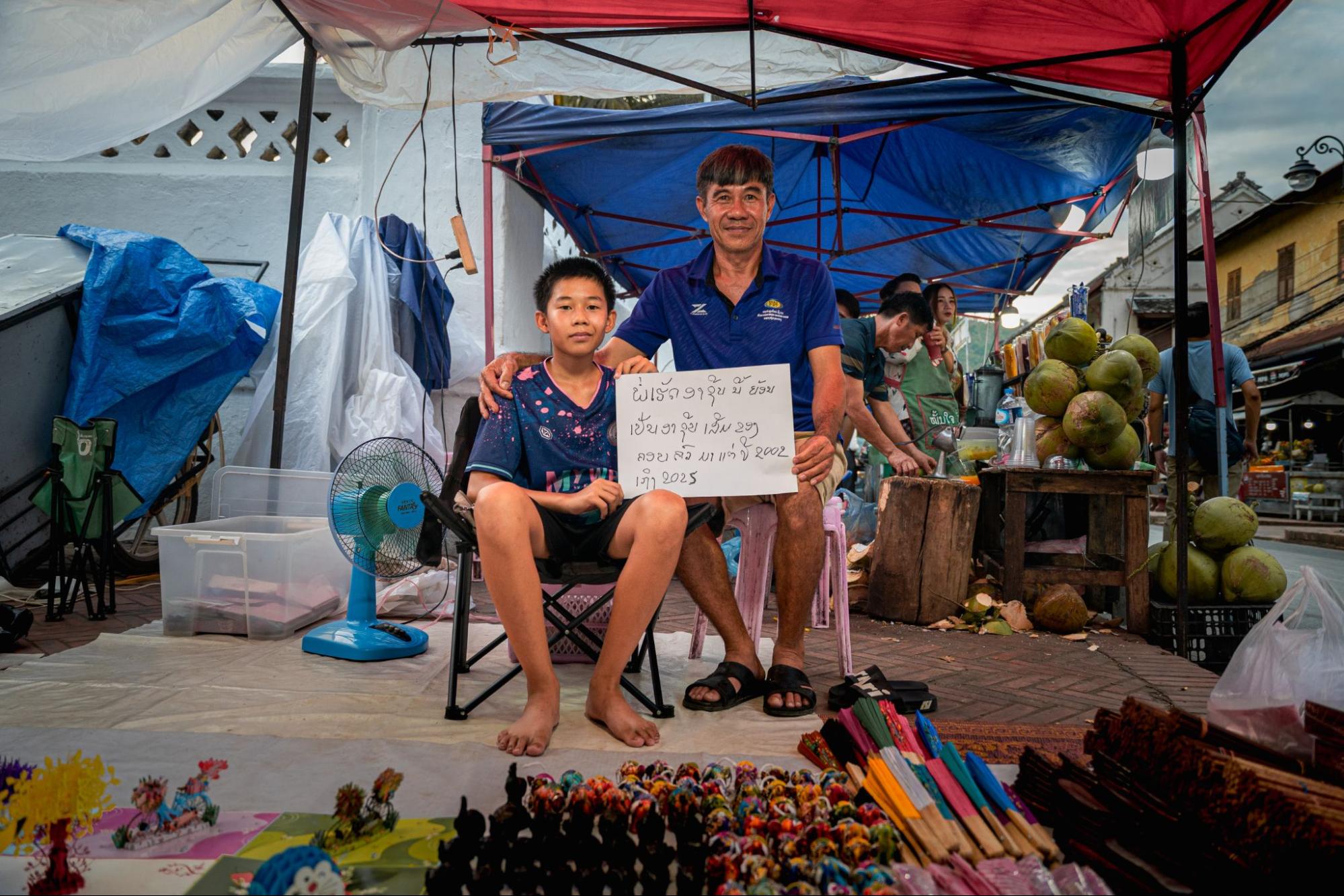
At another tent, paper pop-up cards spring open like stories waiting to be told. Behind the rows of trinkets sits 13-year-old Nutthaxai Southedlat. His father, Konevilai Southedlat, 54, sits right behind, letting his son take the lead.
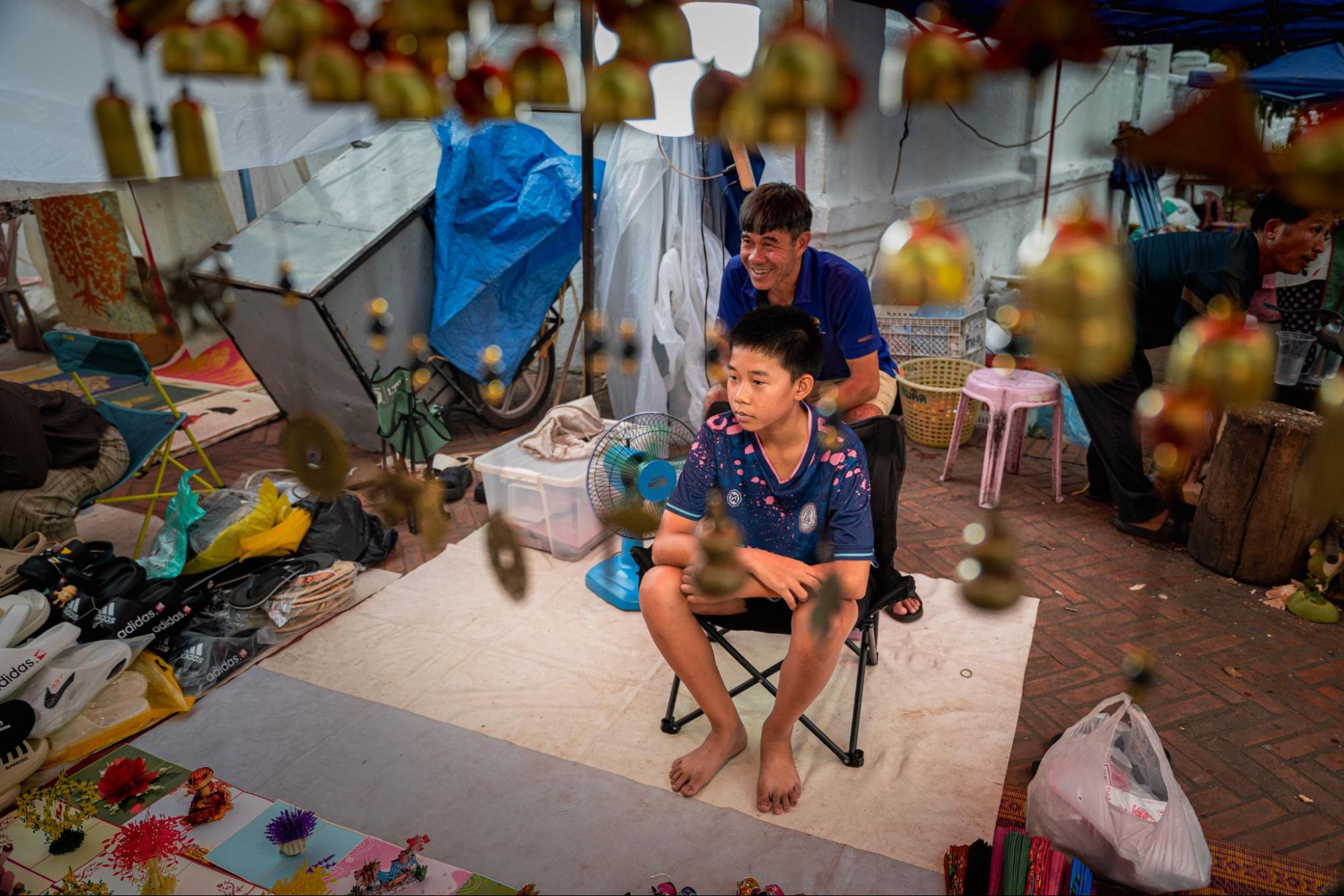
Nutthaxai’s confidence is clear. He greets visitors, speaks Mandarin with Chinese tourists, and shares that he wants to become a doctor one day. “Because it helps society,” he said earnestly.
Selling is something he enjoys; it lets him talk to people and support his parents. The family has been running the stall for about a year, with the cards sourced from other local makers. His mother also helps out occasionally, but it is Nutthaxai who holds the space each night, often arriving right after school.
“I want to continue,” he said. “It helps me practise my language, and I can help my parents too.”
The pride is mutual. His father’s quiet encouragement speaks volumes.
Between Holidays and Homework
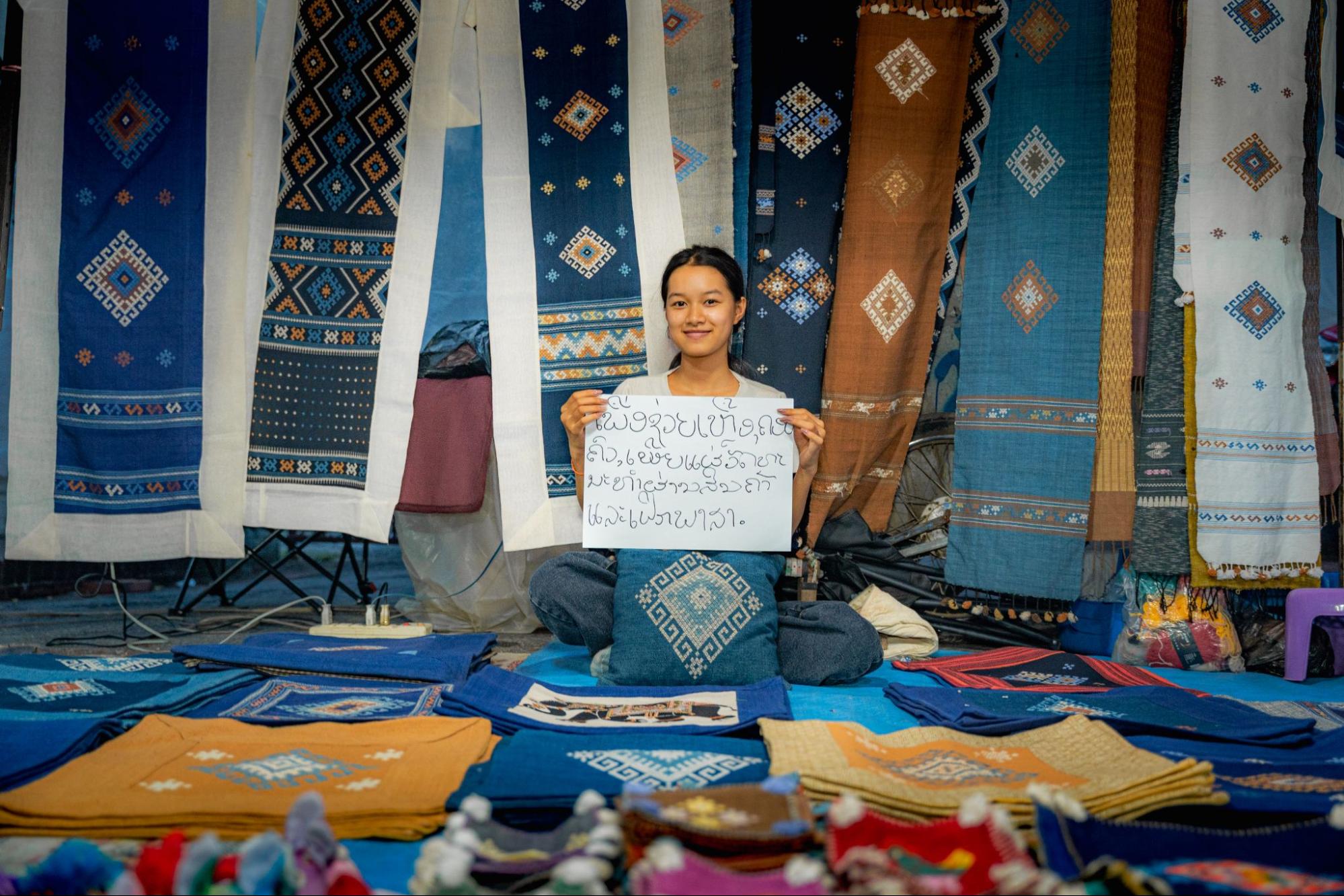
Sixteen-year-old Sounavanh Yodsomfuek has been working at her family’s stall since the pandemic, when COVID-19 disrupted life and schooling across Laos. Her parents opened the stall nine years ago for an extra source of income – her mother is a teacher, her father a bank accountant. When school is out, Sounavanh steps in to help.
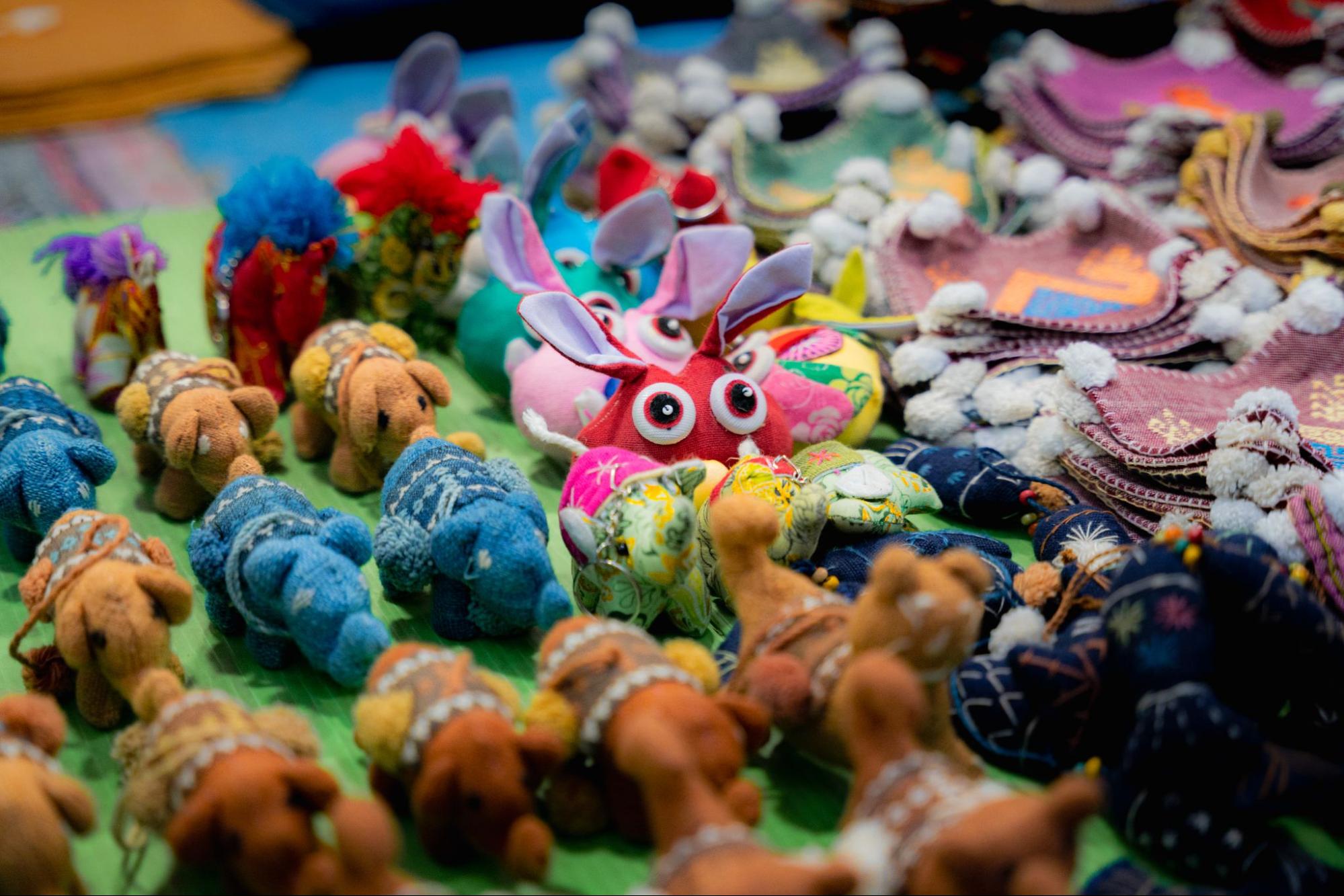
During the summer holidays, she manages the stall herself. Her younger brother, 14, helps to set up the stall. The products, including embroidered coasters, pillowcases, and keychains, are partially handmade by the family, with cross-stitching done by her parents and cousins.
Sounavanh enjoys speaking to guests, especially Chinese tourists, as a way to practise foreign languages and meet people from around the world. “I like to ask why they come here, to travel, or to learn the culture.”
When asked if she prefers working with her parents, she joked, “I like working alone. My parents always nag.”
She dreams of opening her own café or fashion boutique one day, “so I don’t have to listen to orders,” she laughed.
Food for Independence
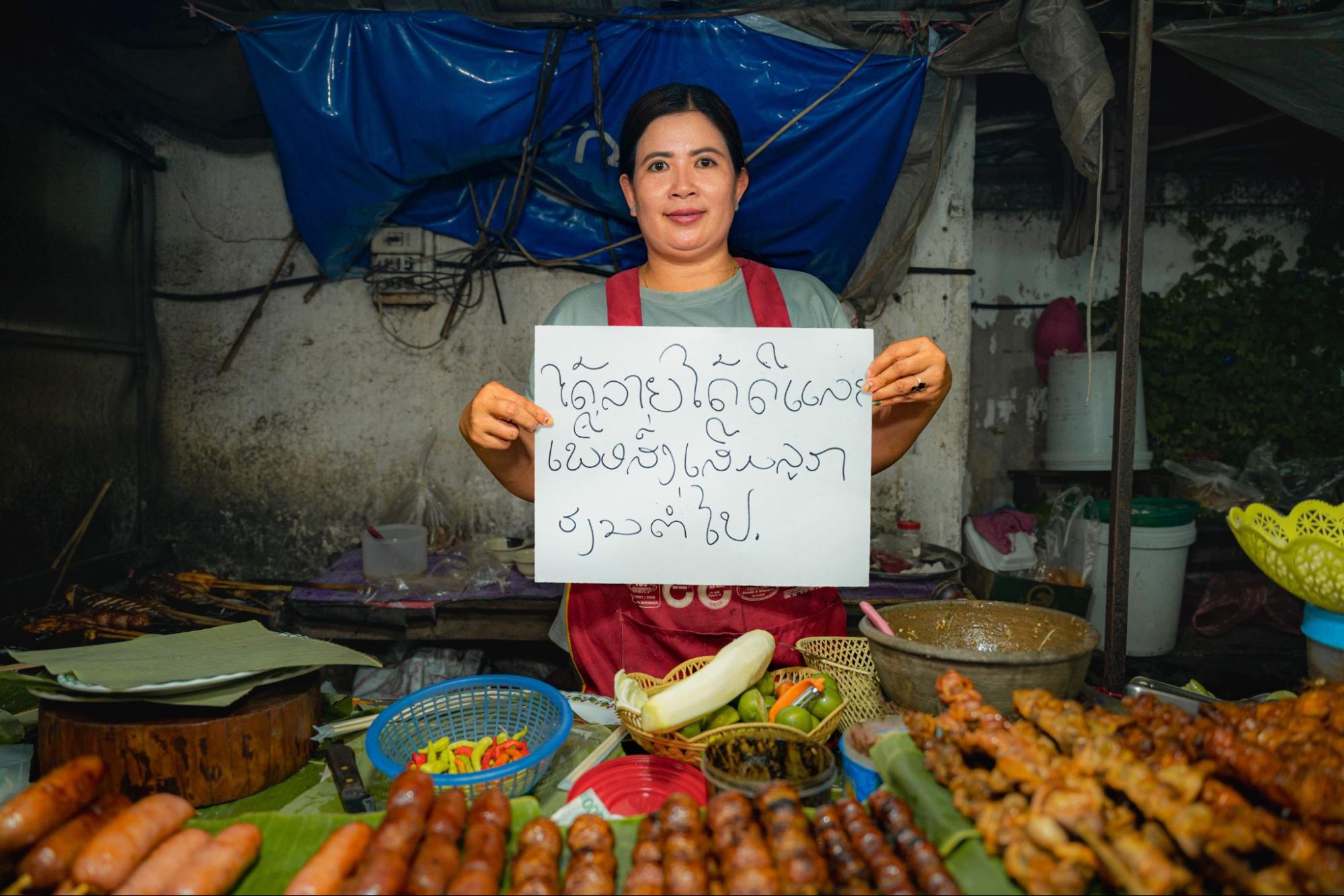
Mone, 48, has sold food at the night market for 18 years, starting just after the birth of her first daughter. Now, that daughter is training to become a police officer, a path made possible by years of Mone’s steady work at the stall. Her two younger daughters, aged 14 and 10, now take turns helping after school or during the holidays.
Every dish sold is handmade. Mone begins cooking at midday and sells into the night. Her husband, an electrician, supports where he can, but the business is run on her terms. In a market dominated by side hustles and shared duties, this stall stands as a quiet act of ownership and pride.
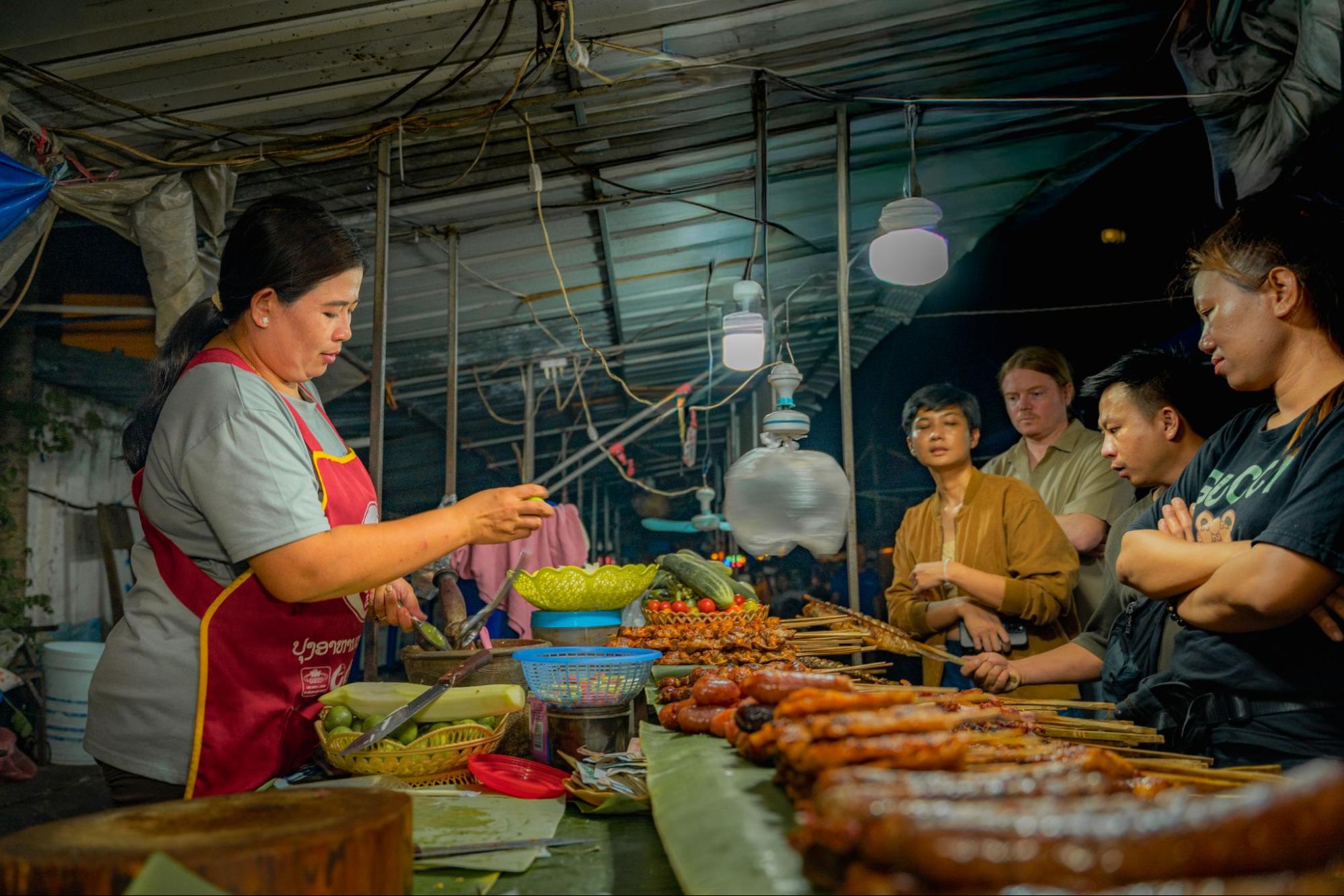
“Working for the government wouldn’t earn enough,” she explained. “This gives me freedom, and it supports my children.”
At times, she managed the stall alone. “It was difficult,” she recalls. But with her daughters helping now, things are more manageable. It is not just a job, it is a way to stay independent, while making sure her children never lack.
Under One Tent: Family, Survival, and the Quiet Strength of the Market
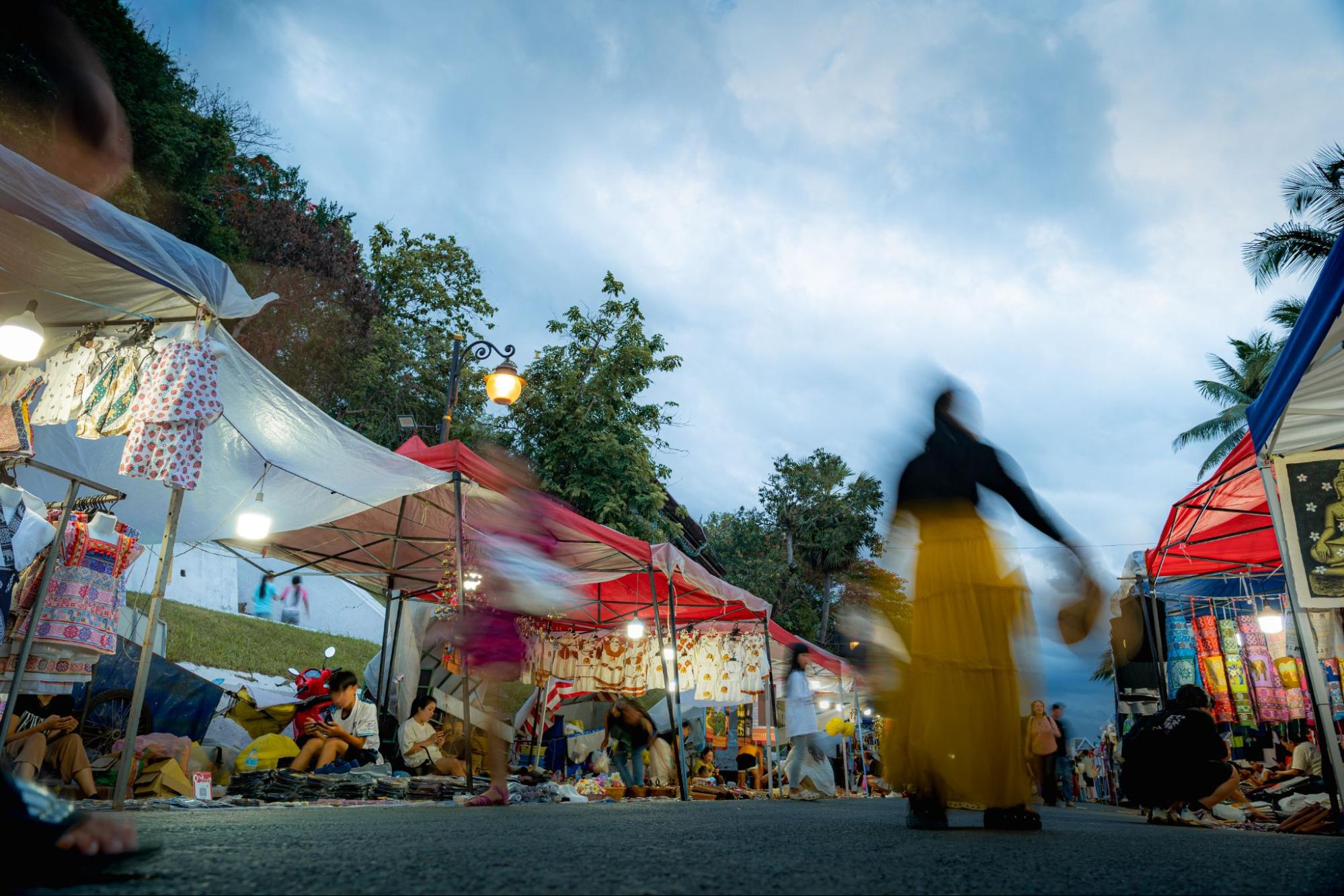
The Luang Prabang Night Market may look like rows of monotony – familiar crafts, familiar prices. But for each family, the choice to be there is deeply personal. Some are there after work. Some are raising children while earning a living. Others, like Nutthaxai or Sounavanh, are growing up in the spaces between school and stall, learning to contribute, to care, and to carry dreams.
In Singapore, we often speak of side hustles, of working hard for family, of dreaming bigger for the next generation. These stories, from a quiet street in Luang Prabang, echo that same rhythm.
At the end of the day, a family is not defined by roles or routines. It is defined by love and the willingness to show up each night, under the same canvas tent, hoping for just one more sale to keep the lights on.
Credits List:
WKWSCI Volunteer Programme
Luang Prabang Night Market
Featuring
Ms Phonnida Inthichan
Toto
Ms Dao Xiong
Ms Lee Thor
Nutthaxai Southedlat
Mr Konevilai Southedlat
Sounavanh Yodsomfuek
Ms Mone
Written by
Goi Ruo En
Edited by
Choo Le Ching, Michelle
Annabelle Tan Hui Ying
Photography
Choo Le Ching, Michelle
Set Assistance
Muhammad Hazwani Danish
Aiman Bin Zahid
Goi Ruo En
Photos Edited by
Aiman Bin Zahid
Translators
Papao (Parny) Xiong ນາງ ປານີ ຊົ່ງ
Phoudthasack Phongdala ທ້າວ ພຸດທະສັກ ພົງດາລາ
Special Thanks
WKWSCI Tech Team
Uncle Allan
Souphanouvong University
 Wee Kim Wee School