Published 20th December 2025
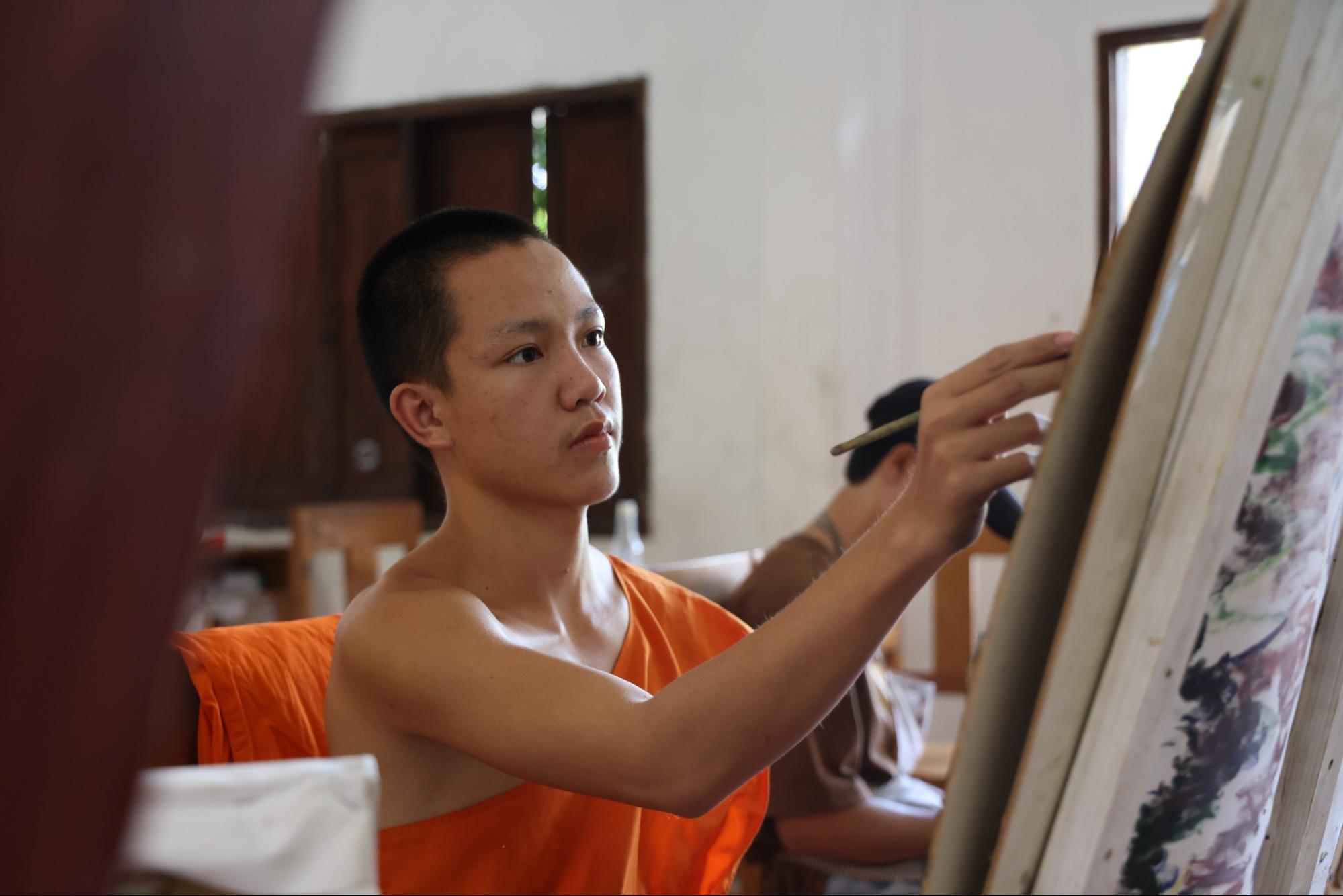
LUANG PRABANG, Laos: In the scorching afternoon heat of the city, a two-storey temple-style building stands serenely under its wooden roof. The distant hum of traffic and soft chirping of cicadas echo inside the Luang Prabang Traditional College of Fine Arts. In a classroom on the ground floor, three students sit quietly, painting portraits of the Buddha.
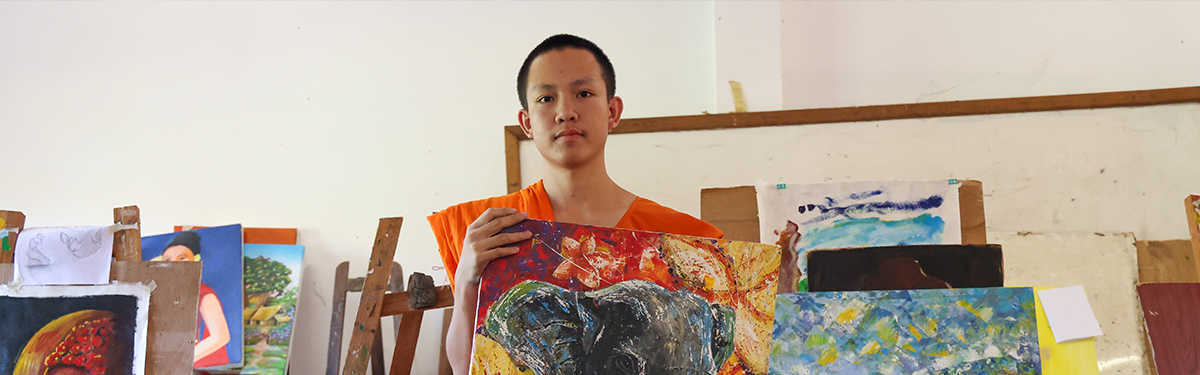
Among them is novice monk Jack Xaisongkham, distinct in his bright orange robes that contrast sharply with his peers' t-shirts and jeans. The 19-year-old’s focus is unwavering as he deftly dabs his paintbrush on the canvas, his delicate strokes revealing both skill and dedication. Seamlessly blending his spiritual and artistic pursuits, Jack thrives as both a monk and an art student.
The Road to Monkhood
Jack's journey to becoming a novice monk began at the age of 14. Hailing from Khop district in Sayabouly Province of western Laos, Jack decided to leave home and embrace monkhood primarily due to his family's impoverished circumstances. As a monk, Jack is provided accommodation, food, and subsidised education, all of which his family struggled to afford with multiple children to care for.
“It is very common for the younger generation to become novices,” Jack said. These teenagers usually join a temple for a few months before returning to lives outside of monkhood, he added.
Despite being the only novice monk in his family, Jack’s parents have been fully supportive of his decision and their encouragement has been a source of strength for him. Jack sees his family once a year during the Lao New Year in April, a joyous and brief reunion.
Daily Life of a Novice Monk
Jack starts each day early. He wakes up by five in the morning to participate in the Alms-Giving Ceremony, a ritual that involves receiving food offerings from the local community. Then, he returns to his temple to pray and have breakfast. By 6am, Jack starts the 1.5 hour journey to Luang Prabang College of Art. His days are filled with classes, studying the Bari Sanskrit –a scriptural language used in Theravada Buddhism – and painting.
Art: A Passion and a Calling
Jack fell in love with painting after attending art lessons at school. His passion is evident in his dedication and quality of work, which can take up to six hours to complete.
When asked about his favourite works, Jack proudly displayed two of his paintings. The first is a portrait of an elephant surrounded by white Champak flowers — the national symbols of Laos. The other is a serene landscape of rice fields from his hometown, where agriculture is the main source of income for locals. Each stroke of Jack’s brush is a tribute to his roots and his aspirations.
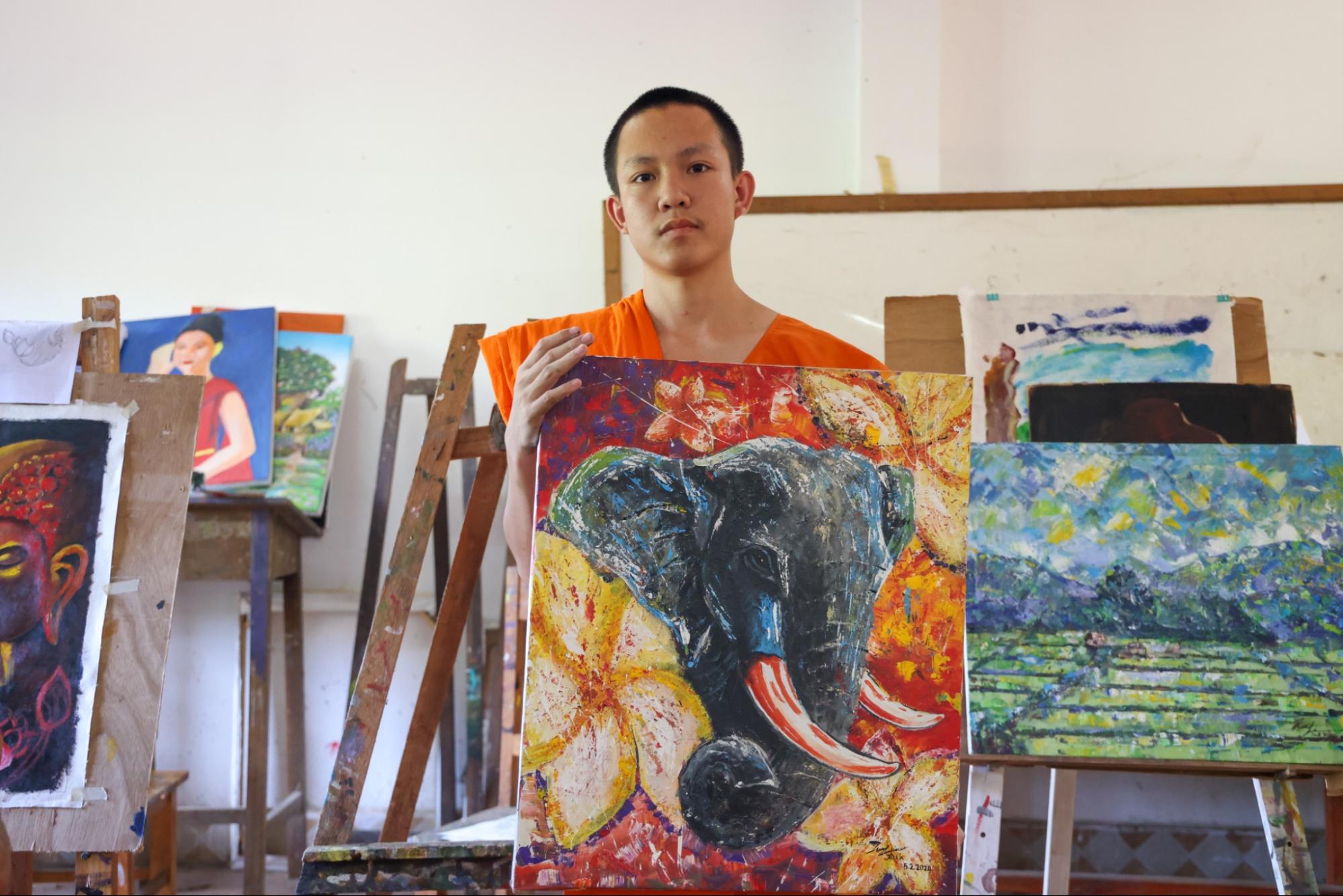
The painting of paddy fields calls to mind Vincent van Gogh’s Wheat Field with Cypresses. Jack, who looks up to the world-famous painter, said, "I want to be a famous artist and sell my paintings.”
The Struggles of Monkhood
While Jack's life as a novice monk offers him stability and an education, it is not without challenges. One of the hardest aspects is travelling, as monks are not allowed to drive. Every day, Jack and other novices from his temple are chauffeured to their destinations by bus or van. This reliance on others for transportation is time-consuming and inconvenient, especially when other Laotians access every nook and cranny of the city on their motorcycles.
Another challenge for monks is relinquishing their earthly pleasures, like using mobile phones or playing sports. However, Jack admits that he enjoys playing mobile electronic sports games like FIFA, and his composed demeanour morphs into a sheepish grin at the mention of his favourite football club, FC Barcelona.
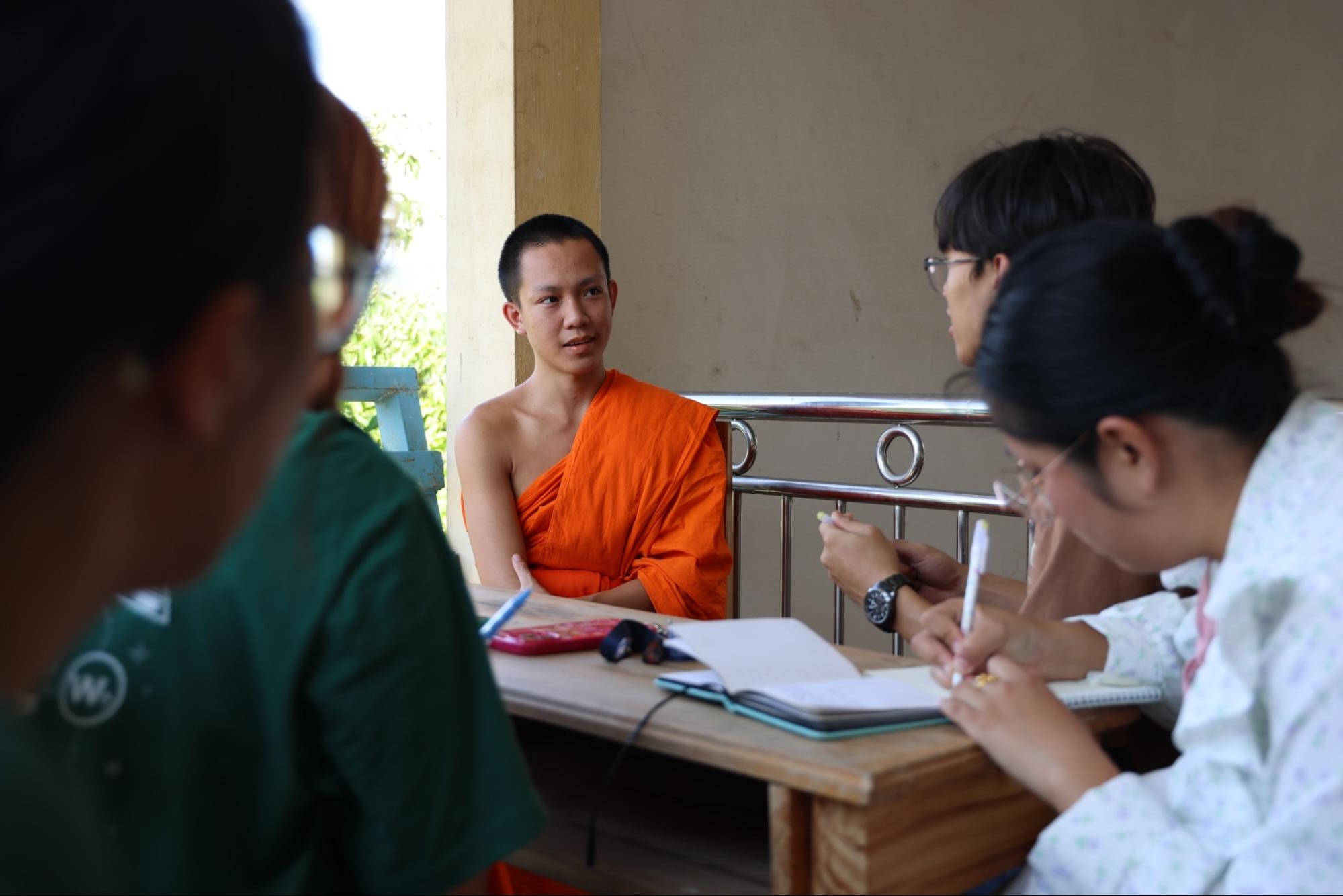
Despite these hurdles, Jack remains optimistic and focused on his goals. Upon graduating with a diploma from the College of Art, he plans to pursue a degree in architecture in Vientiane, the capital of Laos, all while committing to monkhood.
Credits List:
WKWSCI Volunteer Programme
Featuring
Novice Monk Jack Xaisongkham
Special Thanks
WKWSCI Tech Team
Uncle Allan
 Wee Kim Wee School